Select or Enter Gift Amount(HKD):
Asia-Pacific
Children Heal in Relationship Not Systems: A Landmark Training on Family Engagement
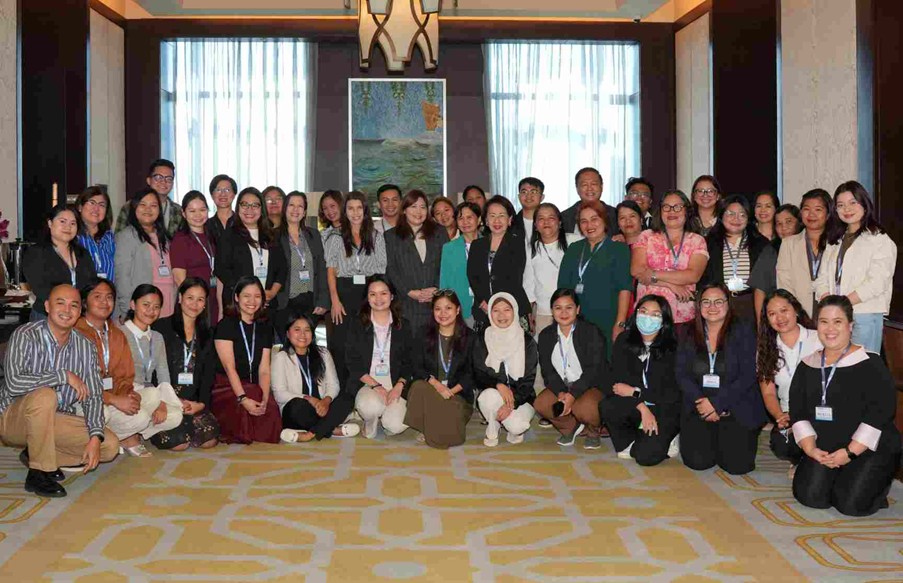
October 25, 2025, The Philippines — IJM conducted the pilot training for the Framework for Family Engagement (FFE) together with partners from Global Child Advocates, Austin Ridge Bible Church, and the Department of Social Welfare and Development.
Survivors of online sexual exploitation of children (OSEC) experience not only the trauma of abuse but also the abrupt separation from family during the rescue process. In many cases, the perpetrators are family members. This is the painful complexity that aftercare faces in OSEC cases. Often, because a family member is behind the abuse, it becomes difficult to see that family—safe family members—can also present the best solution for the child’s placement during the assessment process that follows rescue.
The Framework for Family Engagement (FFE) training took place from October 21-25 at Crimson Hotel in Alabang, and was led by International Justice Mission (IJM) in partnership with Global Child Advocates (GCA) and Austin Ridge Bible Church (ARBC). Social workers from the Department of Social Welfare and Development (DSWD) and the National Authority for Child Care (NACC) and from local government units, shelter staff, and partner organizations gathered with a mindset ready to place themselves in the shoes of the survivor, while rediscovering the value of kinship care and family engagement—not only for child survivors but also for the social workers themselves.
The Framework for Family Engagement was developed by Global Child Advocates (GCA) led by Ashlee Heiligman, who introduced it to IJM. IJM then tested the framework with Shechem, a local shelter. The FFE was then contextualized according to the realities faced by the local aftercare system.
The pilot testing of FFE at Shechem yielded encouraging results. In comparison to 26 children reintegrated with families since 2019 (roughly 5 children per year), the pilot testing of FFE in 2024 led to 9 children being reunified with families within a year, out of the 13 children who were part of the pilot testing.
Why family?
The reality is sobering: OSEC continues to devastate lives across the Philippines. IJM casework shows the average age of rescued children is just 11 years old, and in 42% of cases, the traffickers are parents, relatives, or trusted community members. This makes restoration far more complex than simply removing a child from harm.
“As we know, family is part of the problem. It is so ingrained in our psyche that perpetrators are family members. ” says Jessa Lazarte, Family Engagement Specialist at IJM Philippines. Jessa points out that “the average person has roughly 167 relatives. This means it is likely that a child does have safe family members to explore.
“The Framework for Family Engagement is grounded in the belief that every child deserves a lifelong sense of family, belonging, and stability. It emphasizes the importance of relationships, both familial and community-based, as the foundation for a child’s safety and healing.” This is Global Child Advocates’ guiding philosophy.
Family Engagement is in the best interest of the child
The training reinforced what research and experience have long shown: kinship care—family-based care—offers the best outcomes for survivors:
• Greater stability and fewer behavioral issues
• Better mental health outcomes
• Preservation of cultural and family identity
• A sense of belonging and long-term healing
• Acts as a protective barrier against trafficking and exploitation
• Greatly reduces the likelihood of re-abuse
• Aligns with Filipino values of family and bayanihan Institutional care should only be used when no safe family options exist.
Participant feedback
One participant noted the importance of prioritizing family participation in the healing process. Another shared that “the tools provided were very helpful—preparation became more thorough, and the tools were reliable. The framework had a clear and intentional process that matched real-world situations.”
Participants also shared some insights for consideration, such as the fact that the local government will also need to guard the sustainability of the program through possible transitions such as leadership changes.
Advocating for Family-Based Care
The envisioned outcome of FFE as part is a culture shift in aftercare—less institutional care and more family placements, in which every child survivor receives the healing, support, and relationships they need.